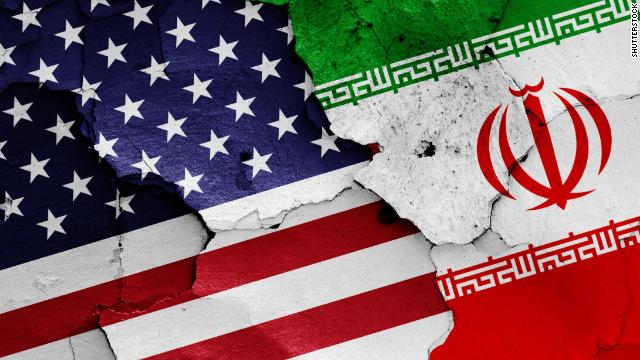
The relationship between the United States of America and the Islamic Republic of Iran has entered one of its tensest phases in recent memory. Successive threats and military posturing by the U.S. under President Donald Trump have reignited fears of a wider regional conflagration in the Middle East. While Washington has deployed aircraft carriers and warships to the region and publicly warned Tehran of possible “very strong” military options, Iran has responded with firm resistance and repeated warnings of retaliation. Both sides have also engaged in cautious diplomatic talks, yet mutual distrust persists.
For much of the last century, the US–Iran relationship has been fraught with mutual suspicion and sporadic confrontation. In 2025, the Trump administration again embraced a hard-line “maximum pressure” strategy—imposing sweeping sanctions and threatening military action aimed at curbing Iran’s nuclear program, its ballistic missile capabilities, and its support for regional proxies. These measures have heightened tensions, expanding the risk of miscalculation and instability across the Gulf and beyond.
The current dynamic reflects more than typical great-power rivalry; it is a combustible mix of historical resentment, regional rivalries, and domestic political pressures on both sides. The United States remains Iran’s most powerful adversary, and repeated military threats—even if they are intended as leverage for negotiation—risk deepening hostility. Tehran, for its part, has openly repudiated any attempt to impose a settlement on its terms and has made clear that any attack on Iranian territory or forces would invite retaliation.
In this context, India’s foreign policy must resist the temptation to choose sides. For New Delhi, neutrality is not an act of diplomatic timidity, but a well-calculated stance rooted in strategic interest and historical principle. India’s ties with both the United States and Iran are valuable and distinct. Washington is a major partner in trade, investment, and strategic cooperation in the Indo-Pacific. Tehran, meanwhile, is central to India’s energy security and regional connectivity ambitions—most notably through the Chabahar Port project, which offers New Delhi a rare overland route to Afghanistan and Central Asia, bypassing Pakistan. Recently, Iranian officials publicly acknowledged India’s cooperation on Chabahar as a “powerful symbol of cooperation” amidst global tensions.
Neutrality is also consistent with India’s longstanding commitment to strategic autonomy. New Delhi has traditionally avoided entanglement in great-power confrontations, emphasising independent decision-making on foreign policy matters. In the case of the US–Iran standoff, embracing neutrality reduces the risk of being drawn into a conflict that does not directly implicate India’s core security interests. It also preserves New Delhi’s ability to act as a mediator or interlocutor should diplomatic avenues open further.
Moreover, taking sides could have real repercussions at home. India’s large diaspora and diverse population include communities with cultural and historical affinities across West and South Asia. An unequivocal alignment with one side in a major geopolitical dispute could polarise domestic opinion and complicate social cohesion.
Ultimately, the lesson of recent decades is clear: force and threat only escalate crises; diplomacy and dialogue—however fraught—offer the only pathway to lasting peace. As the United States and Iran continue to navigate a perilous relationship, India should hold to a posture of principled neutrality, reinforcing its image as a responsible global actor and safeguarding its strategic interests without compromise