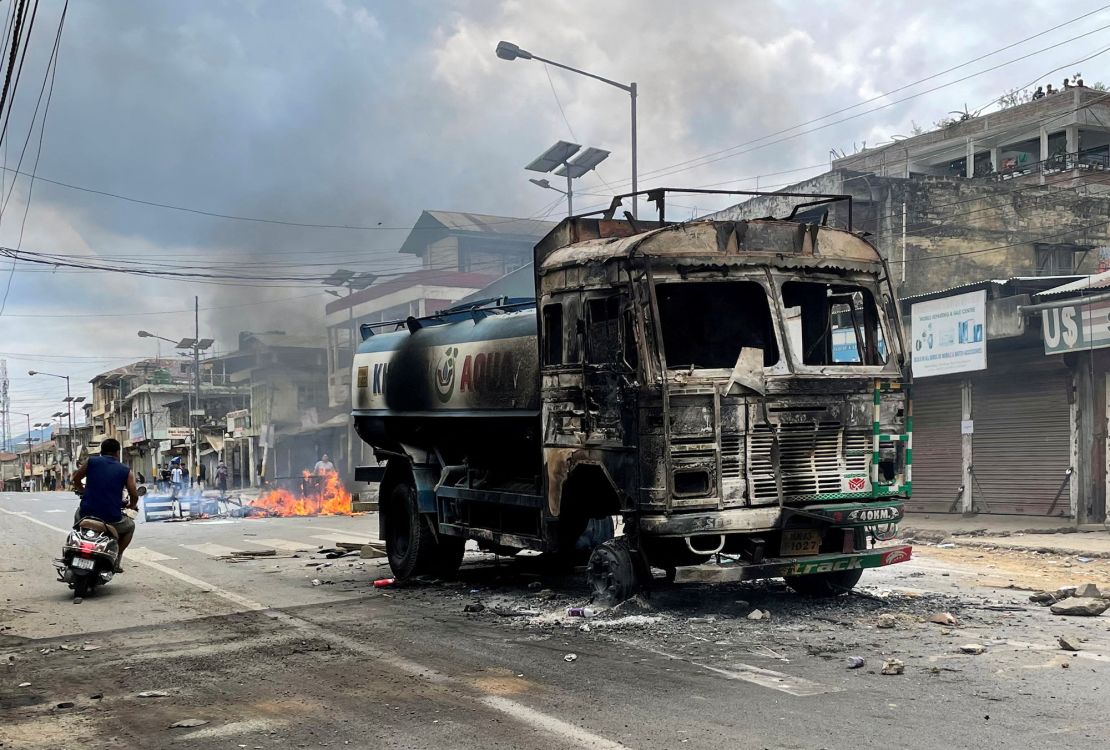
Nearly three years since violence erupted in Manipur in May 2023, the state remains trapped in a cycle of fear, displacement, and unresolved grief. What began as ethnic clashes between communities has metastasised into a prolonged humanitarian and political crisis. The most disturbing aspect of this tragedy, however, is not merely the breakdown of law and order within Manipur, but the sustained failure of the Government of India to offer a credible political response. Delhi’s approach—marked by silence, securitisation, and strategic delay—has deepened mistrust and prolonged suffering.
From the outset, the Centre treated the Manipur crisis primarily as a “law and order problem.” Thousands of central forces were deployed, curfews imposed, and internet services suspended for months on end. Yet violence continued intermittently, armed groups flourished, and over 60,000 people were displaced. Relief camps became semi-permanent, while normal civic life collapsed. Security measures, while necessary to prevent immediate bloodshed, were never accompanied by a political roadmap. Force was substituted for dialogue, and containment replaced resolution.
Perhaps the most telling failure has been the political invisibilisation of Manipur. For months after the violence began, there was no all-party meeting convened by the Centre, no sustained parliamentary debate, and no prime ministerial visit to the state. The absence of the Prime Minister—Narendra Modi—from the ground zero of one of India’s worst internal conflicts sent a chilling message: that Manipur was not urgent enough for national attention. This vacuum allowed rumours, radical narratives, and ethnic hardening to take root.
The Centre’s reluctance to acknowledge the political nature of the conflict has been equally damaging. The Manipur crisis is not a spontaneous riot; it is the outcome of deep-seated grievances over land, identity, political representation, and historical marginalisation. Administrative measures and court rulings may have acted as triggers, but the fuel lay in unresolved political questions. Ignoring this reality has meant ignoring the communities themselves—particularly those who have consistently demanded dialogue, constitutional safeguards, and political guarantees.
A purely security-centric approach also risks normalising exceptional measures. Extended internet shutdowns curtailed journalism, civil-society intervention, and humanitarian coordination. The Armed Forces (Special Powers) Act was selectively imposed and withdrawn, adding to perceptions of bias. Instead of restoring confidence, these steps entrenched suspicion—especially when allegations of partisan policing and selective enforcement went unaddressed.
Peace in Manipur cannot be imposed; it must be negotiated. A political solution is not optional—it is the only viable path forward. This begins with the Centre acknowledging all stakeholders as legitimate political actors, not security threats. Structured dialogue involving community representatives, civil-society groups, and elected leaders must be initiated under a neutral framework. Confidence-building measures—such as safe return of displaced persons, rehabilitation guarantees, and accountability for crimes—are essential preconditions.
Ultimately, Manipur needs a political settlement that addresses core issues of coexistence, autonomy, and protection of identity within the constitutional framework. This requires courage from Delhi: to listen rather than dictate, to mediate rather than manage, and to lead rather than delay. Until the Centre abandons its politics of silence and embraces a genuine political process, peace in Manipur will remain fragile, deferred, and unjust