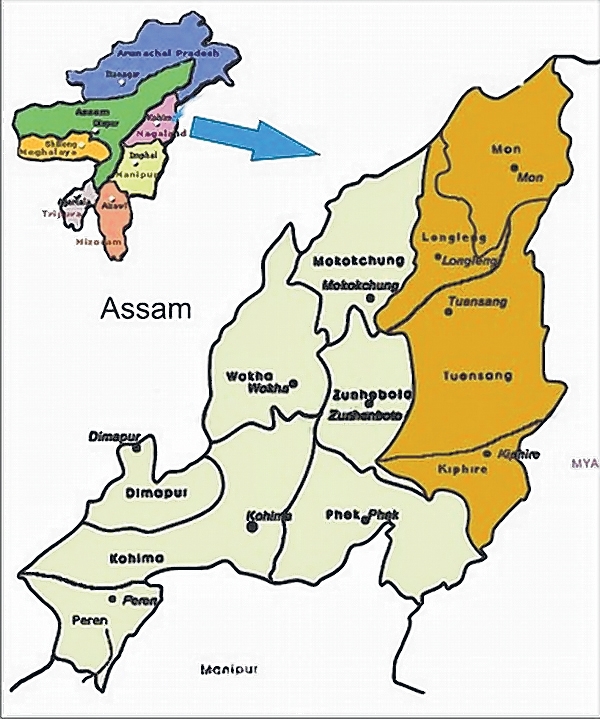
The Naga political struggle, one of the longest running conflicts in South Asia, did not emerge from a vacuum. It was shaped by a powerful assertion of identity, led initially by the Naga National Council (NNC) under A.Z. Phizo, who argued that the Nagas were never historically part of India and therefore deserved sovereign status at the time of independence. The idea of sovereignty became the emotional and political anchor of the movement. Over the decades, the leadership mantle shifted, particularly after the 1975 Shillong Accord, which many Nagas saw as a betrayal. The emergence of the National Socialist Council of Nagalim (NSCN) in 1980, and later the dominant NSCN-IM faction under leaders like Thuingaleng Muivah and Isak Chishi Swu, kept the sovereignty narrative alive, though in increasingly complex forms.
So who is behind the struggle today? It is no longer a single organization or personality. The movement is sustained by a network of armed groups, political negotiators, tribal bodies, civil society organizations, and an emotional public memory of resistance. The NSCN-IM remains the most influential negotiating entity, but other Naga National Political Groups (NNPGs) have also entered into talks with the Government of India. This multiplicity of actors has both broadened representation and deepened fragmentation. What once was a unified call for independence has become a contested negotiation over what constitutes an acceptable political settlement.
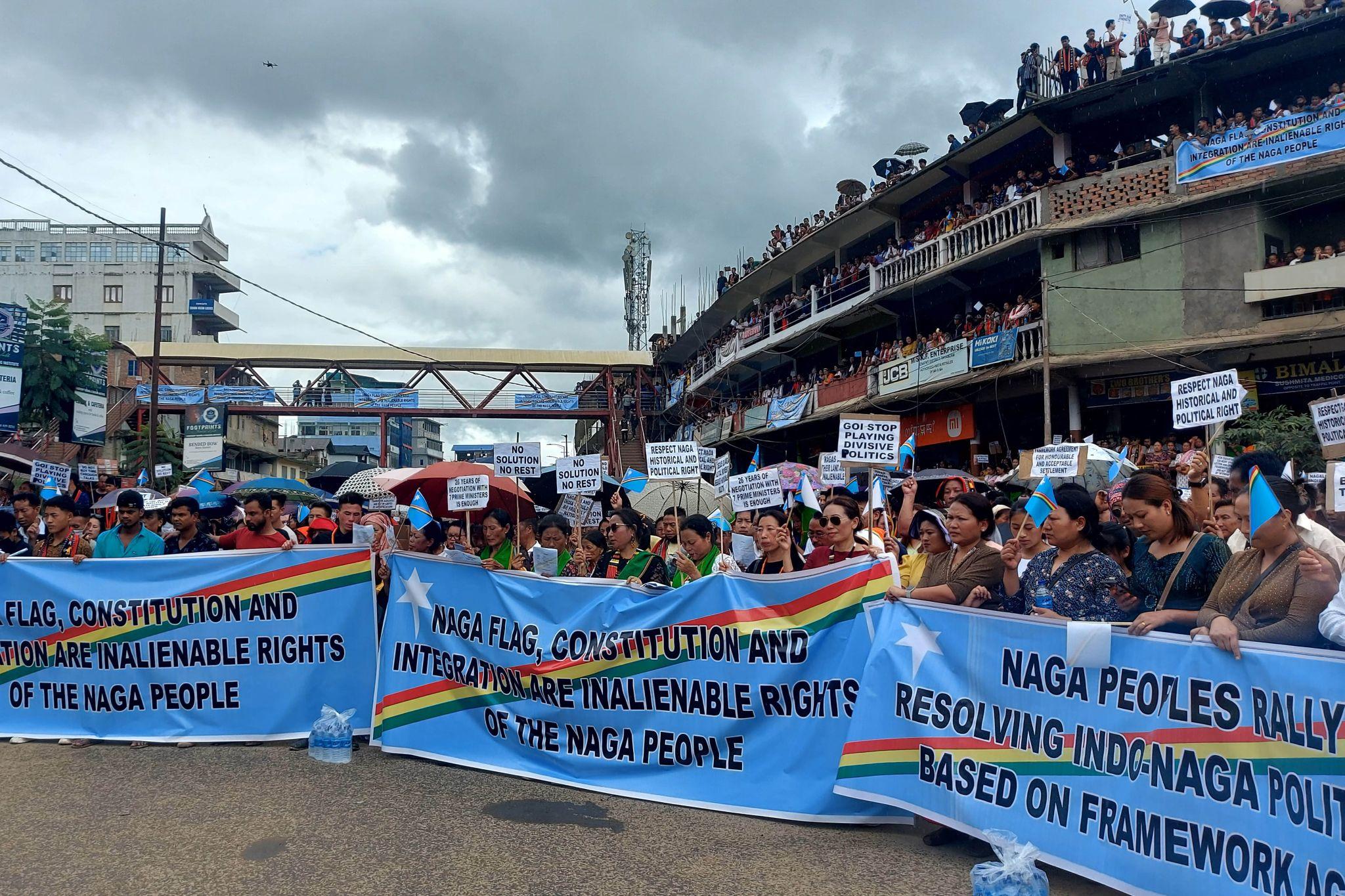
The deadlock over signing a final agreement reflects this internal and external tension. The 2015 Framework Agreement between the Government of India and NSCN-IM was hailed as historic. It acknowledged the “unique history” of the Nagas, a phrase loaded with symbolic meaning. Yet symbolism cuts both ways. The NSCN-IM has insisted on recognition of a separate Naga flag and constitution, seeing them as minimum markers of political dignity. The Indian state, while willing to expand autonomy, has drawn a firm line against any arrangement that appears to dilute constitutional sovereignty or territorial integrity. This clash over symbols has become the central stumbling block.
But the deadlock is not only about Delhi’s red lines. It is also about the evolution of the Naga aspiration itself. The original demand for outright independence has gradually shifted toward enhanced autonomy within India. Younger generations are increasingly concerned about development, governance, corruption, and economic opportunity. Prolonged ceasefires have reduced violence, but they have also created a space where armed groups coexist with parallel taxation systems and factional rivalries. Many ordinary Nagas now ask whether the promise of sovereignty has been replaced by a politics of indefinite negotiation.
From sovereignty to what now? That is the uncomfortable question. If sovereignty in its classical sense is unattainable, the movement must articulate a clear, unified alternative. Is it a federal restructuring? A special autonomous arrangement with cultural and legislative safeguards? Or merely symbolic concessions that preserve pride without altering constitutional realities? Without internal consensus, even the most generous offer from New Delhi will struggle to gain legitimacy.
The tragedy of the Naga struggle is not that it has endured for decades, but that its moral clarity has become blurred by factionalism and strategic ambiguity. Peace requires compromise, but compromise requires unity of purpose. Until Naga political groups reconcile among themselves and redefine their end goal in concrete terms, the final agreement will remain perpetually “almost signed.” The struggle began with a bold claim of sovereignty; its future depends on the courage to define what justice and dignity mean in today’s political landscape.